
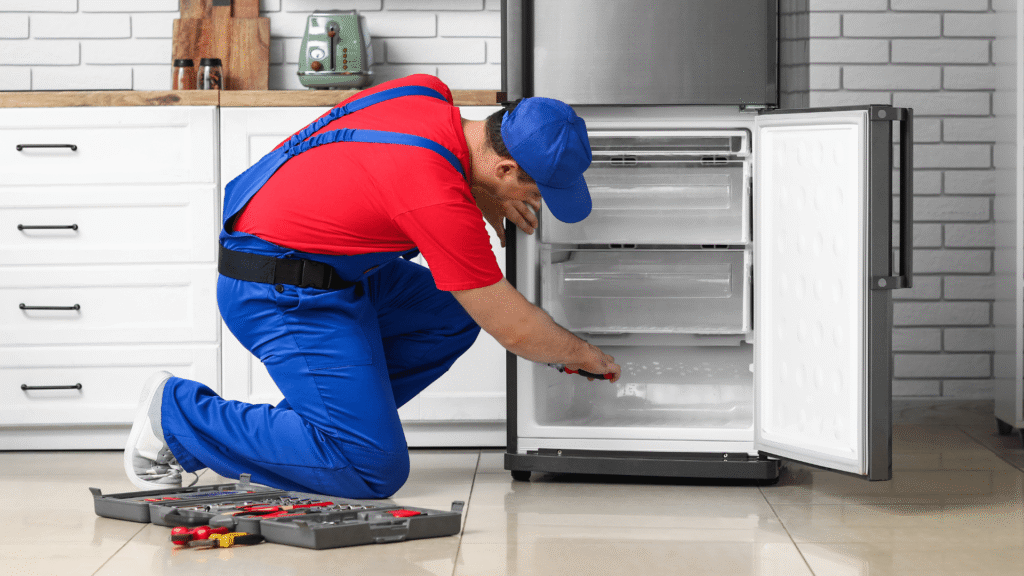
A refrigeration system fails overnight. By morning, a restaurant, food manufacturer, or distributor may be dealing with two expensive problems: damaged equipment and thousands of dollars of spoiled inventory.
Would one insurance policy cover both losses?
Not necessarily. Food spoilage insurance and equipment breakdown insurance can protect businesses from different parts of the same incident. Understanding the difference can help restaurants, manufacturers, contractors, and other blue-collar businesses identify coverage gaps before an equipment failure becomes a major financial setback.
What Is Food Spoilage Insurance?
Food spoilage insurance, or food spoilage coverage, can help cover the value of perishable products that become unusable after certain covered events.
For example, imagine a restaurant’s walk-in freezer stops working. The restaurant may lose meat, seafood, dairy products, frozen foods, and other inventory before the problem is discovered.
Depending on the policy and cause of loss, spoilage coverage may help reimburse the business for covered spoiled inventory.
This protection can be especially valuable for restaurants, grocery businesses, commercial kitchens, distributors, and food manufacturers that depend on refrigeration every day.
The risk is significant. The FDA reports that an estimated 30% to 40% of the U.S. food supply is wasted, although this estimate includes food loss and waste from many causes and is not a measure of insured spoilage claims.
What Is Equipment Breakdown Insurance?
Equipment breakdown insurance focuses primarily on certain sudden and accidental mechanical, electrical, or pressure-system failures.
Think beyond a broken refrigerator.
Depending on the policy, coverage may apply to equipment such as refrigeration systems, boilers, electrical systems, production machinery, air-conditioning equipment, and other essential business equipment.
The California Department of Insurance explains that equipment breakdown coverage can address direct property loss from damaged equipment as well as certain related losses, including lost business income, temporary replacement equipment, and the value of spoiled products or materials. Exact protection depends on the policy.
This makes equipment breakdown coverage particularly important when evaluating food manufacturing insurance, restaurant insurance, manufacturing coverage, and insurance for machinery-dependent blue-collar businesses.
How Are Food Spoilage And Equipment Breakdown Coverage Different?
The easiest way to understand the difference is to look at what was damaged.
Equipment breakdown coverage can focus on the machinery itself and qualifying losses resulting from its breakdown. Food spoilage coverage focuses on perishable inventory that can no longer be safely sold or used.
Consider a California food manufacturer with a commercial refrigeration system.
An electrical or mechanical failure damages a refrigeration unit. Repairing the system costs $20,000. Unfortunately, the temperature also rises before repairs are completed, ruining $35,000 of refrigerated inventory.
The company’s total exposure isn’t simply the $20,000 machine.
It could be $55,000 before considering lost production, cleanup, overtime, replacement rentals, or interrupted revenue.
Whether those losses are insured depends on the specific policy, exclusions, deductibles, limits, endorsements, and cause of the breakdown.
What About Power Outages And Utility Interruptions?
A refrigerator can stop working even when the equipment itself isn’t broken.
For example, an external power outage could shut down refrigeration long enough to destroy perishable inventory. Standard commercial property insurance does not automatically mean every off-premises utility failure or resulting spoilage loss is covered.
That’s where utility interruption coverage may become important.
Businesses should also review business interruption insurance or related business income coverage. A covered incident could cause more than physical damage. A manufacturer might lose production for several days, while a restaurant could be forced to temporarily close.
The key question isn’t simply, “Is my equipment insured?”
Ask: “What happens financially if this equipment stops my entire operation?”
Why California Food Businesses Have Additional Risks
California food businesses also operate under state food-safety requirements.
The California Department of Public Health (CDPH) regulates food manufacturing, processing, storage, and distribution. Businesses that manufacture, repack, label, or warehouse processed food generally must obtain a Processed Food Registration, which acts as a basic health permit.
Importantly for startups, CDPH states there is no small-business exemption from the Processed Food Registration requirement based simply on company size or annual sales.
Why does this matter for insurance?
A refrigeration failure isn’t only a repair problem. Temperature-sensitive inventory may become unsafe or unusable, while interrupted production can create additional operational and financial consequences.
California manufacturers and startups should therefore evaluate California business insurance based on their complete operation—not simply the replacement value of their building and machinery.
Which Coverage Does Your Business Need?
There isn’t one answer for every company.
A contractor may have expensive compressors, generators, or electrical equipment but little perishable inventory. A restaurant could have significant refrigerated inventory plus multiple refrigerators and freezers. A food manufacturer may have millions of dollars tied to machinery, production schedules, raw materials, and temperature-controlled products.
That is why coverage should be built around your actual risks.
Review your equipment values, maximum inventory levels, refrigeration dependency, potential downtime, utility exposure, and the revenue you could lose after a covered shutdown.
Bottomline: Build Protection Around Your Real Business Risks
A broken machine can cost much more than its repair bill.
For restaurants and food-related businesses, one equipment failure could result in damaged machinery, spoiled food, interrupted operations, lost revenue, and unexpected recovery expenses.
IRONCLAD helps restaurant owners and blue-collar businesses explore custom-built insurance solutions based on how their businesses actually operate. Instead of focusing only on basic property protection, IRONCLAD can help you evaluate exposures involving equipment, inventory, refrigeration, business interruption, and other operational risks.
The goal is simple: understand where one loss could create several financial problems—and build your insurance program accordingly.
Coverage availability, terms, limits, exclusions, and deductibles vary by insurer and policy. Review your specific policy and endorsements to determine what is covered.